8 7. Movement: builds, throws, risers
You’ll have: a 16-bar build — the pad filter opening, the reverb send climbing, a noise riser rising into the drop — ready to drop into the arrangement.
8.1 Say
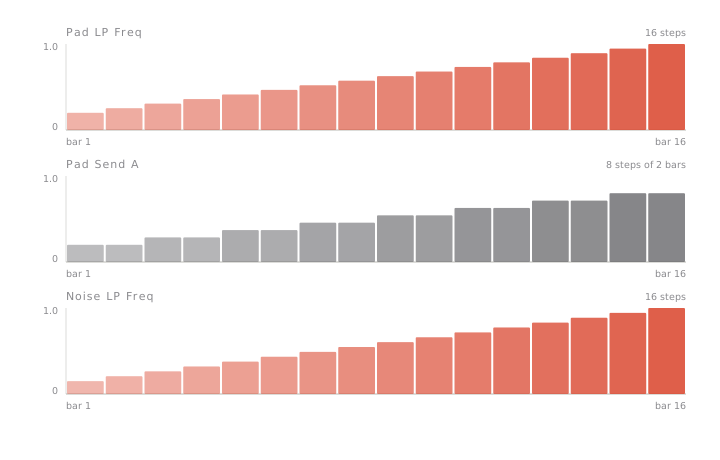
Make a 16-bar build: pad filter closed to open, reverb send from 0.2 to 0.8, and a noise riser that climbs. Clear the old sweep on the Mid bass first.
8.2 What Claude does
Copies the loops into scene 2 — a copied clip brings its automation with it — and clears the old sweep on the copy, so the lesson-3 clip keeps its own. Stretches the pad copy to 16 bars and writes the progression out three more times, because lengthening a clip doesn’t lengthen the notes inside it. Adds a Noise track, then writes three automation curves on three different things: a device knob, a send, and the riser’s filter. Every knob on Drift runs 0 to 1, so Claude reads each one’s range before writing — on that scale 0 is the bottom of the range, not a neutral middle.
8.3 What you’ll see in Live
New 16-bar clips in scene 2. Each shows its envelope in the Envelopes tab. Play scene 2: the pad opens, the reverb swells, the noise climbs.
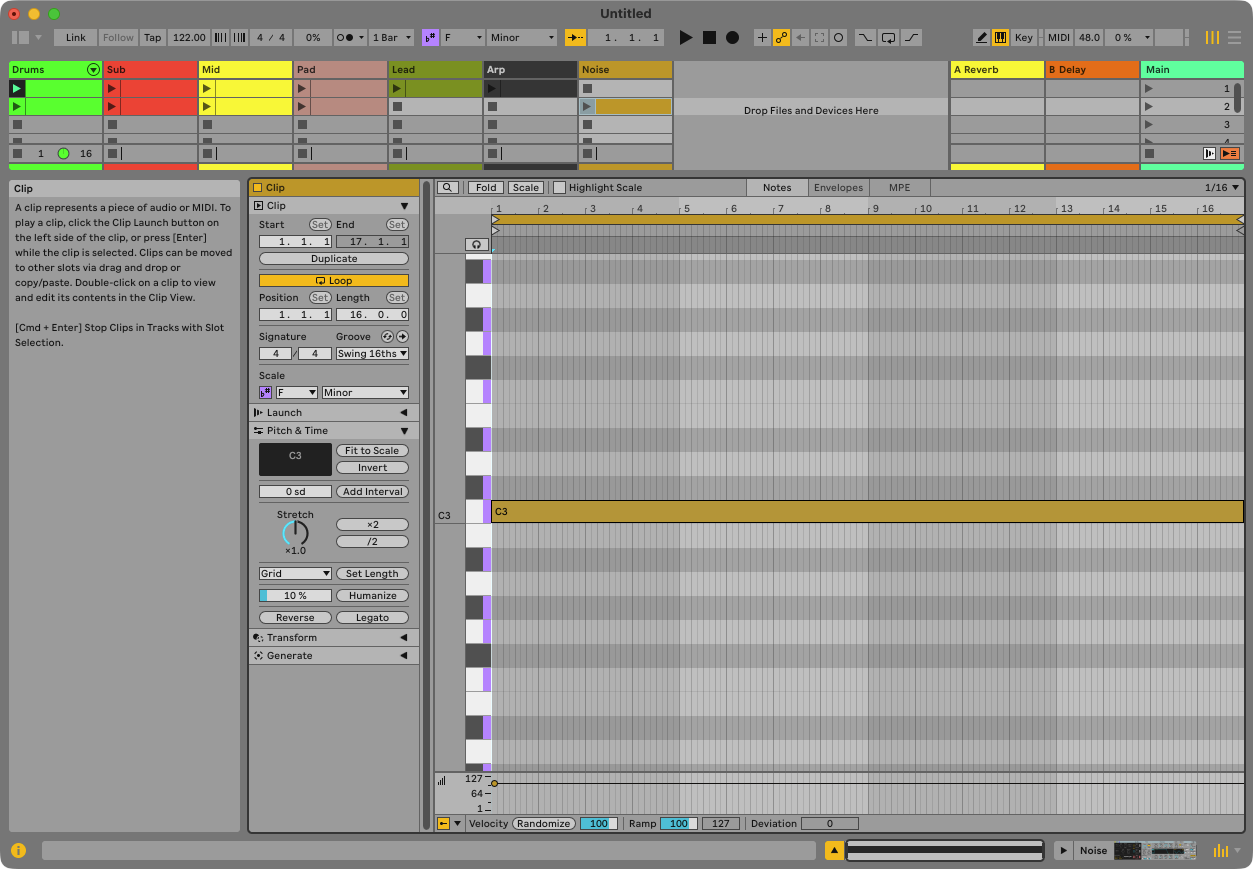
Scene 2 playing — the playhead crossing the riser’s single note while each track counts its own bars off in the clip row above.
8.4 Check
Ask: “play scene 2 and tell me the reverb send at bar 8” — around 0.46, the middle of its climb. Ask about the very first instant of a step and you get the value from the step before it: Live treats an edge as the end of what came before, so the honest place to read automation is inside a step, not on its boundary. Claude should say so rather than report the curve as broken.