6 5. Melody and arp: the hook
You’ll have: a Lead track with a plucked melody — a two-bar call, a two-bar answer, one blue note — and an Arp track running each chord as rising 16ths.
6.1 Say
Write a plucky lead melody over the chords — a two-bar call and a two-bar answer, mostly scale tones, one blue note. Then an arp track that runs each chord as rising 16ths. Humanise the arp velocities.
6.2 What Claude does
Reads the key and the pad’s chords back from Live, derives the scale, writes the melody and the arpeggio, then nudges the arp velocities so they aren’t identical. Before deciding anything it reads all the tracks in one pass.
6.3 What you’ll see in Live
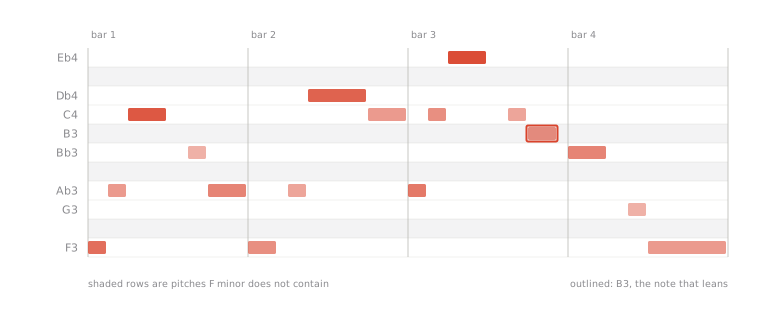
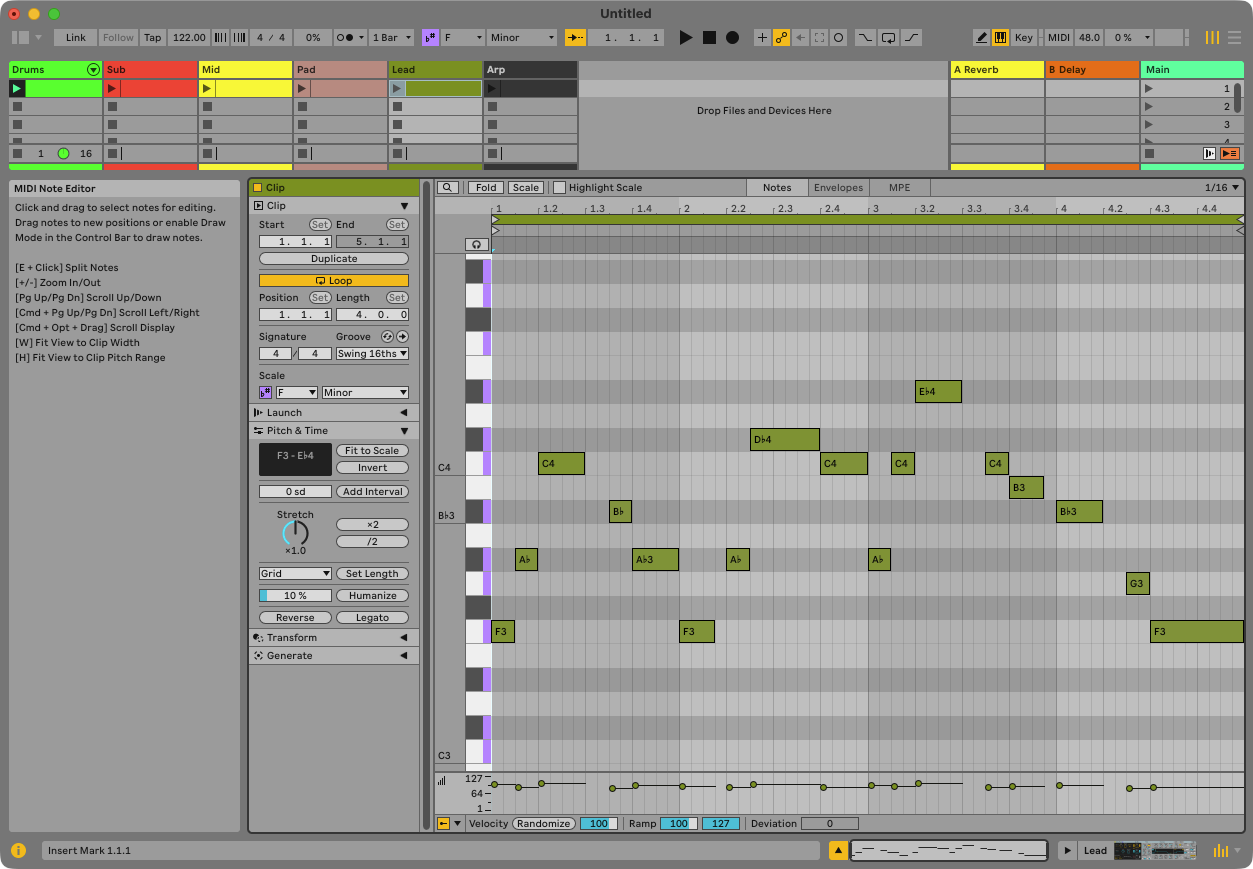
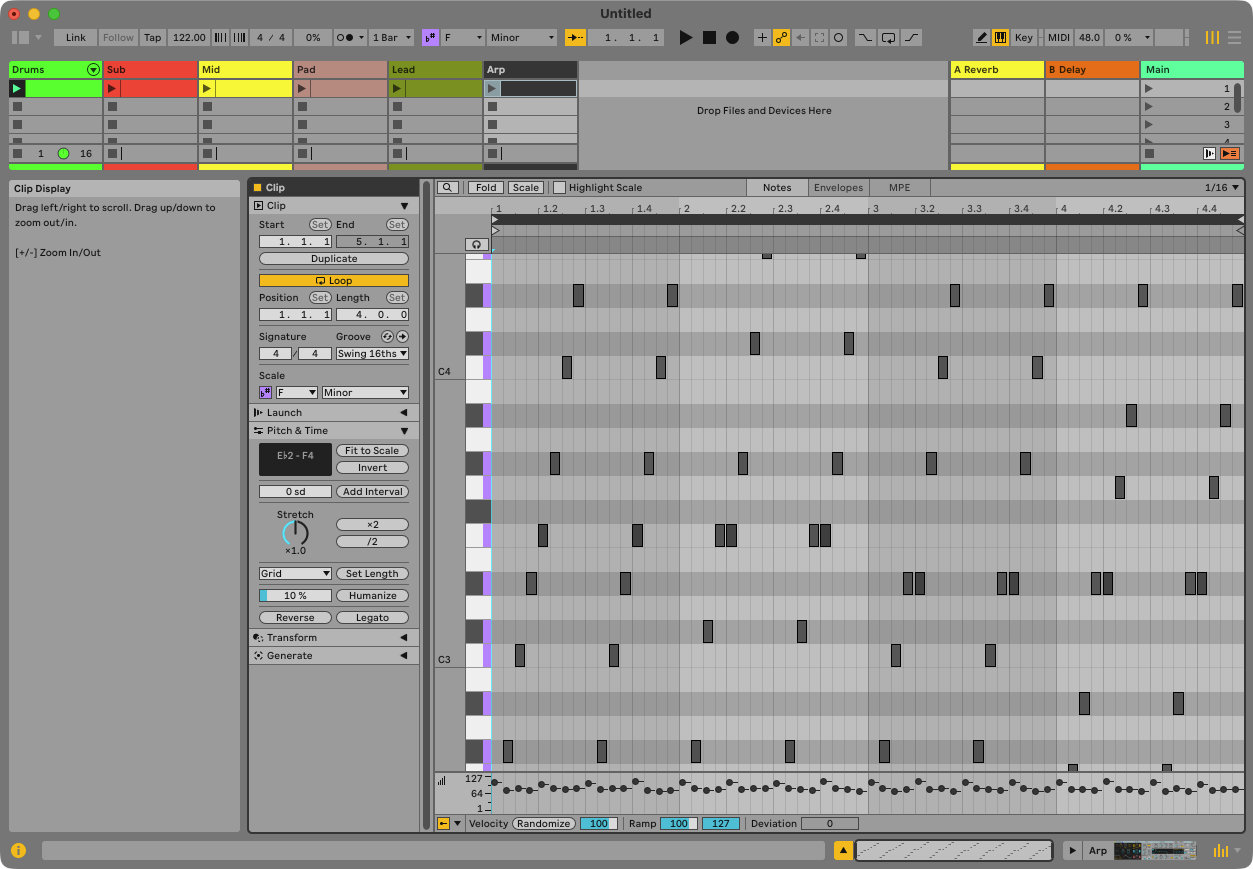
Two more tracks. The arp clip is dense — sixteen notes a bar, 64 in all. The lead clip has 17 notes, one of them outside the F minor scale; hover it and you’ll see B.
6.4 Check
Ask: “which note in the lead is the blue note?” Then: “thin out the end of bar 2 of the lead” — Claude removes whatever falls in that stretch of the clip, by pitch and time range, rather than rewriting the clip from scratch.